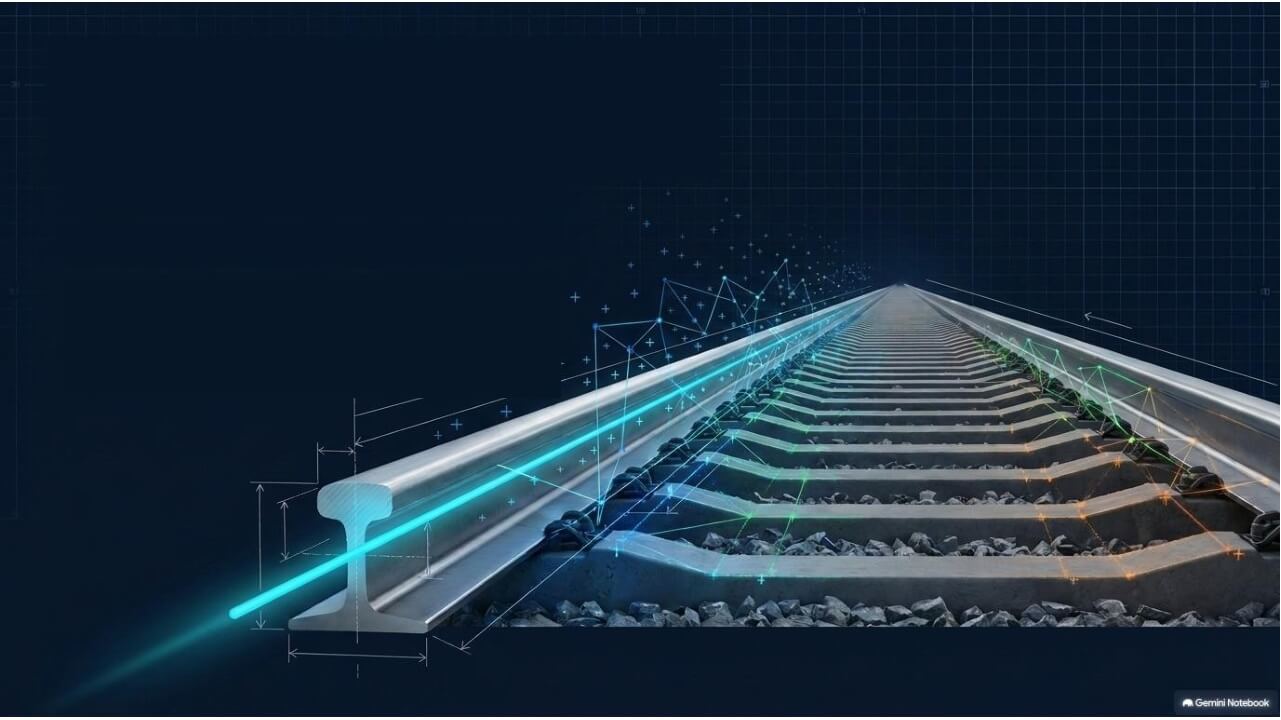
Optical fibre senses stress, temperature and the way rail infrastructure responds to loads.
FIBERSEC
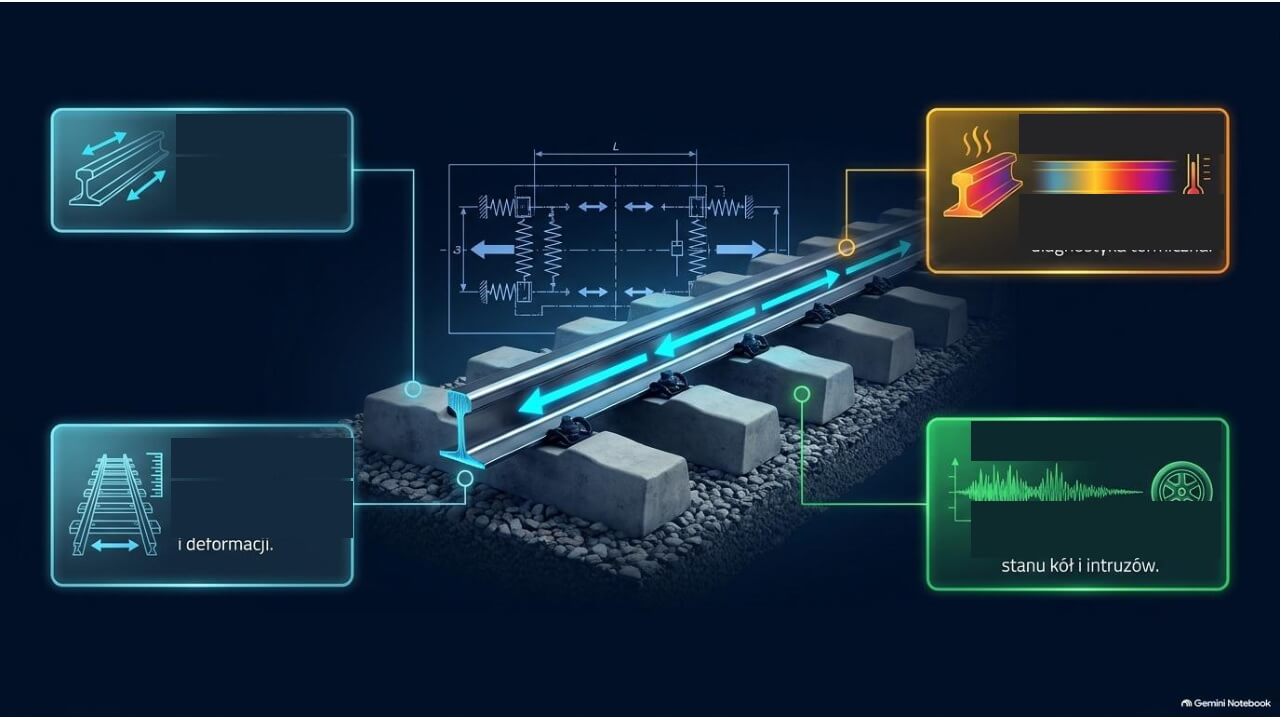
Turning rail infrastructure into a sensor
Strain
Track rail creep and longitudinal forces.
Temperature
Assess thermal conditions and buckling risk.
Displacement
Detect movement and deformation.
Vibration and sound
Analyse train dynamics and wheel condition. Detect intrusions.
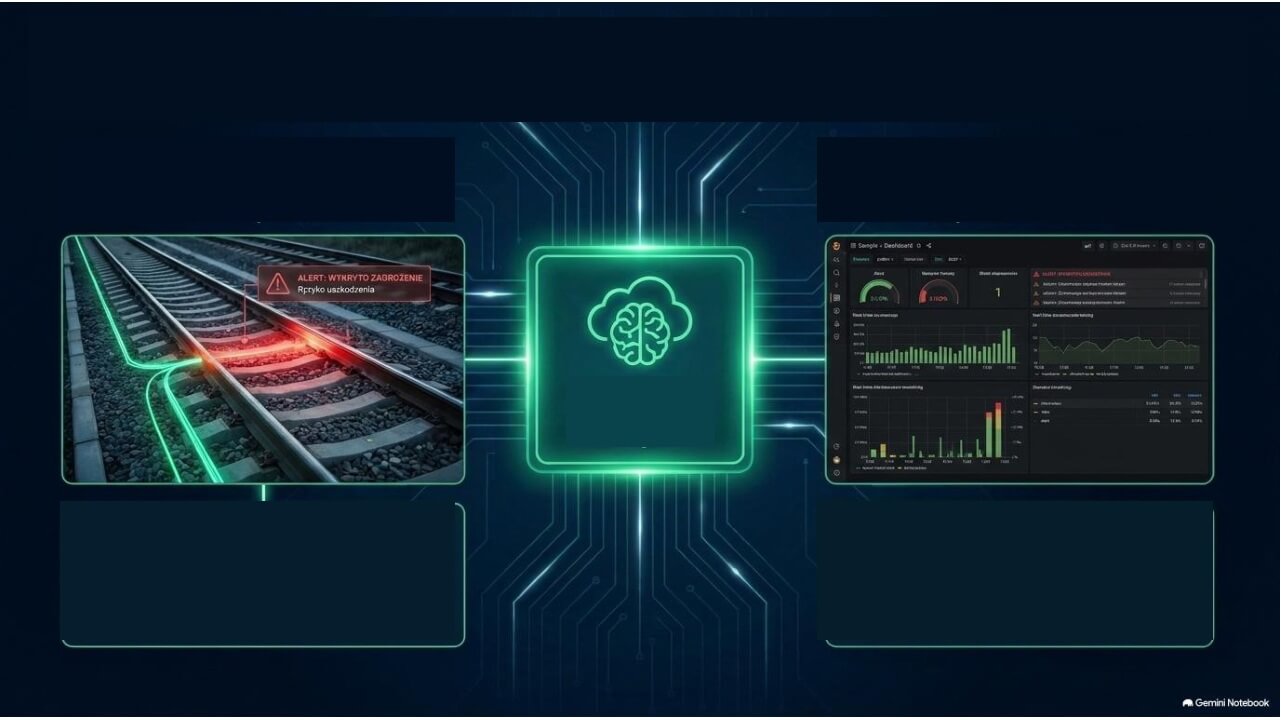
FIBERSEC uses standard fibre-optic cable to monitor infrastructure and anticipate hazards around the clock.
FIBERSEC
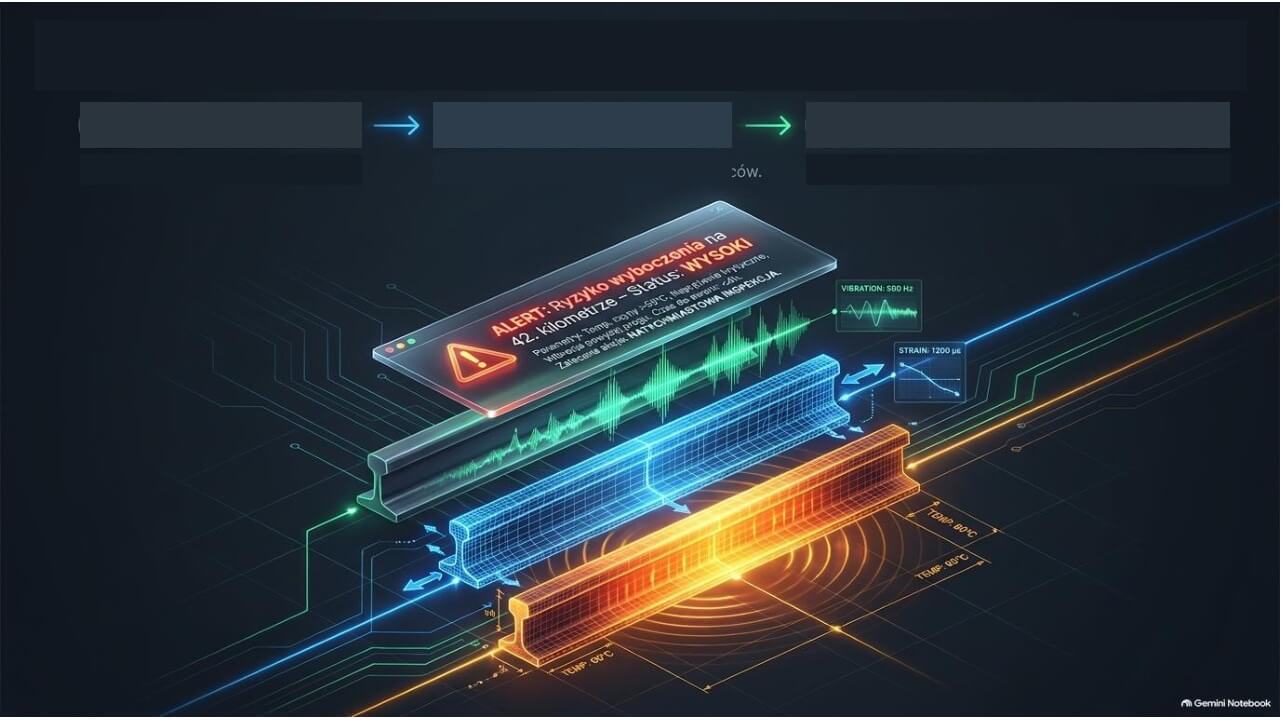
An infrastructure digital twin
1. Measure (raw data)
High-sensitivity sensors capture signals.
2. Analyse (physics and AI)
Filter noise and classify patterns.
3. Interpret (maintenance insights)
Use the results to inform maintenance decisions.
04 / Field Monitoring
Residual Stress Monitoring Post-Weld Rail Stress in Real Time
Monitoring strain and stress-related changes in welded rails during normal train operations.
Fibre-optic sensing hardware installed on the rail web. Photograph supplied by FIBERSEC.
What are residual stresses?
Residual stresses are internal stresses that remain in steel rails after welding and cooling, even when no external load is applied. Non-uniform heating, cooling and structural changes during welding generate these stresses.
Why do they matter?
Residual stresses affect the structural integrity, fatigue performance and long-term reliability of welded rail joints. Excessive residual stresses can contribute to crack initiation and fatigue damage.
What does FIBERSEC enable?
FIBERSEC enables real-time monitoring of strain and stress-related changes in welded rail sections without interrupting normal train traffic. The field measurement concerned rail stresses after welding, with monitoring during normal train operations.
FIBERSEC
Business model: Sensing as a Service
Deployment (CapEx)
Customers pay for installation of the sensing infrastructure and calibration of the measurement equipment.
Data as a Service (OpEx / SaaS)
A recurring subscription covers access to the digital twin and continuous, real-time analytics.